Fuzzy Photos
From Lambeth to Battersea
I was recently on a train to London from my home in Emsworth and I saw the upgraded Battersea Power Station in all its [expensive] glory. It got me thinking about my grandmother Minnie who was born in Lambeth but who grew up in Battersea.
Minnie was a formidable woman and a proper matriarch. She and my grandfather Ernest (for some unknown reason known as Joe) had 13 children, yes, THIRTEEN children between 1936 and 1959. As a child, just one look from Minnie would reduce me to a quivering wreck. When we visited, we had to sit quietly, speak only when we were spoken to, and eat everything that was put in front of us, and believe me she was not a great cook! My grandad, on the other hand, was the strong silent type who would take refuge in his pigeon loft when Minnie was on the warpath.
While I know a lot about my father’s side of the family I know very little about my Mum’s side of the family. I have very few photos of Minnie; most of them are fuzzy and were taken on old black-and-white film in the 1970s. I didn’t even know if Minnie had any brothers or sisters and although my mum would sometimes refer to Uncle this and Auntie that, the family was so large I couldn’t quite get my head around who was who. My grandad was an only child and I wondered if Minnie had a large and welcoming family that was so comforting that he wanted the same thing from his own family.
Minnie Florence Louisa Corbett was born right in the middle of the First World War on the 31st August 1916 at 18 Leopold Street, Lambeth. Her father Albert was from Battersea and worked on the railways. Her mother Elizabeth Mary Jane Holland, was from Bermondsey. Elizabeth and Albert married at the Parish Church in Southwark on the 20th October 1912 [2] Albert and Elizabeth went on to have 3 children, Elizabeth, Minnie, and Albert – so not a large family after all.
At some point after the War, Minnie and her family moved from Lambeth to Battersea. When the 1921 census was taken the family lived at 23 Haines Street, just off Battersea Park Road.[1] The houses on Haines Street and the surrounding streets were built around 1870. The area was later described in the Charles Booth Poverty Maps as a fairly decent working-class area. Haines Street ran southeast from Nine Elms Lane and the railway line to the goods yard at Nine Elms ran at the bottom of the road. These streets remained in place until they were demolished in 1970 when the New Covent Garden Market was built.
Albert worked had started working with the London and South Western Railway as a Railway Cleaner in 1879. By 1921 he was a Railway Checker for the same railway working at the Goods Yard at Nine Elms, so at least he didn’t have too far to walk to work.

London – London XI.22 – Revised: 1893, Published: 1895.
Elizabeth’s father William Holland had died before she and Albert were married. William had been a Waterside Labourer – one of the thousands of men working in the warehouses and wharves that served the port of London. Although jobs could be seasonal and precarious William seemed to earn enough money to look after his wife and growing family. William was only 41 years old when he died of double pneumonia and cardiac failure. At the time of his death, the family lived at Parker’s Buildings in Bermondsey. [3] With little income and no financial support, the family soon struggled. Elizabeth was 15 years old when her father died and being the eldest daughter likely took care of her brother William and 3 sisters, Eliza, Rose, and Amelia. Then to make matters worse, Elizabeth’s mother was in the early stages of pregnancy. With another baby on the way and her mother unable to work, Elizabeth and her 13-year-old brother William were under great pressure to help their mother financially and emotionally.
Primrose Ellen Emily Holland was born in Bermonsey on the 12th April 1909 and baptised a few weeks later at St James Church on Jamaica Road. [4] Although it was a happy occasion Minne now had to find sufficient funds to feed herself and 6 children.
Sadly within a year, Amelia, Eliza, and Rose were admitted to the St Olave’s workhouse. I don’t suppose the decision to do so was taken lightly, and I’m sure Minnie made the decision for the benefit of her young children. She knew they would be fed, clothed, and schooled in a children’s home and she knew that when things improved she would bring them back home.
Money was so tight that by the time the 1911 census was taken Minnie, Elizabeth, William and baby Primrose moved to much smaller accommodation. The family had one room at 27 Vienna Road, Bermondsey and the house was shared with two other families. Elizabeth made a living folding boxes, possibly at one of the local factories and William was employed as a van boy.
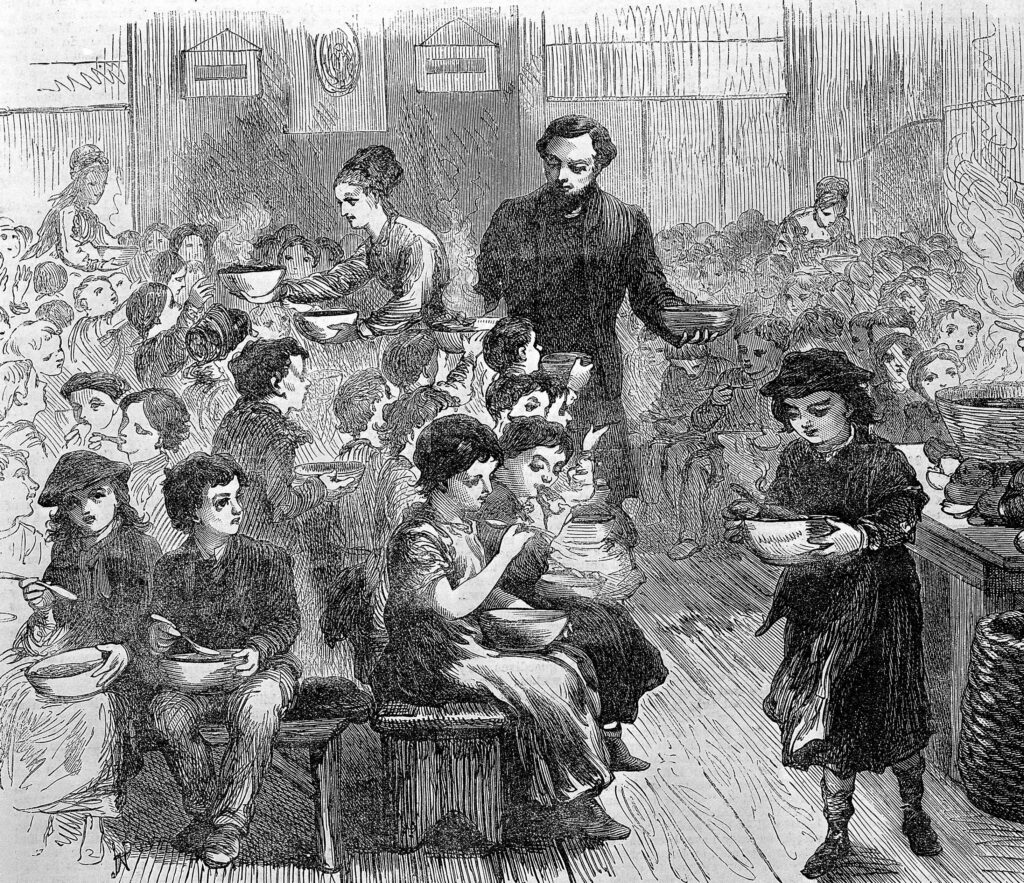
Amelia, Eliza and Rose spent the next few years in care, living in various children’s homes including The ‘Elmside’ cottage home in Peckham and the Shirley Cottage homes which had been built by the St Olave’s union. The Shirley Cottage homes were made up of several houses all under the care of a house-mother or house-father.[5] The homes took children from the age of 3 to 16. Younger children were cared for and schooled and the older children learned trades in order to support themselves in later life. Primrose was occasionally placed in care during times when her mother was sick but in the main seemed to remain at home with her mother. This film, although made in 1929 shows a little of the lives of the children who lived there : https://player.bfi.org.uk/free/film/watch-shirley-schools-1929-online
Then suddenly in 1915 Amelia, Eliza and Rose were discharged to the care of their parents, and more specifically their mother, “Mrs Corbett” who took them to live at 13 Arden Sreet, Battersea. This was confusing and initially assumed that the record referred to Elizabeth Corbett, the children’s sister, and that the home had incorrectly recorded the relationship.
I already knew that by the time the 1921 census was taken, Elizabeth was living with her husband Albert on Haines Street. But I had no idea what had happened to Minnie Louisa Holland and couldn’t find a record of her at all. I thought she may have died, but no record was found. So I stripped back the search and suddenly found a marriage record for Minnie Holland. And yes, Minnie had married again. The name of her husband was to be a complete surprise.
Rather than being discharged into the care of their sister Elizabeth Corbett, they had been discharged into the care of their Mother who, in the Spring of 1915 married Albert Corbett the widowed father-in-law of her daughter Elizabeth. What a surprise!
Albert’s first wife Caroline died in 1912 and Albert and Minnie married three years later. This makes my family tree a bit messy but it was heart-warming to discover that in her final years, Minnie married again and had a happy life with her new husband. It did make me chuckle to think that for Albert Corbett Jr, it took the mother-in-law joke to the next level with Minnie being both his step-mother and mother-in-law.
When the 1921 census was taken, I learned that Minnie Louisa and Albert were living at 13 Arden Street, Battersea; just around the corner from her daughter Elizabeth. Albert died in 1925 and Minnie Louisa died just 3 years later. I felt very proud of this strong woman who despite hardship and difficulties had managed to bring her family back together. All of her children went on to marry and have their own families.
I’m pretty sure Minnie’s steely character has been passed down through the generations. I am clearly reading between the lines but I was so proud to discover how determined Minnie was to get her daughters back. The fact that Elizabeth was the breadwinner of the family at such a young age was incredible; to support her mother and siblings by doing a menial and repetitive job day in and day out is amazing. And, as scary as my grandmother was when I was a child, she has to be applauded for bringing up 13 children in a 3-bedroom semi-detached house. And me, well, I guess I inherited my determination and no-nonsense approach from my mother one of Minnnie’s 3 daughters.
It then got me thinking about Minnie Louisa’s mother. I knew her father was Edward Stowe, a Cook, but where had Minnie Louisa Stowe come from, and what had given her such strength of character? I’ll tell Minnie’s story the next time when I head to the East End of London.