When AI Gets a Good Telling Off
I was recently sent an AI-generated hypothesis of a family history by a client I have worked with for several years. He’s a very smart guy, loves testing technology and at first glance, the output looked impressively structured with dates, relationships, plausible connections, and even suggestions for further research. It had the confident tone that makes computer-generated narratives very persuasive.
There was just one small problem.
The subject in question died in 1814 at the age of 71. Yet AI confidently suggested to my client that this same individual married a woman in Hampshire in 1748, when he would have been five years old.
Even allowing for the occasional irregularity in parish registers, I think we can safely rule that one out.
After pointing this out to my client, he told me he gave the AI resource a “good telling off,” which made me laugh. But beneath the humour lies an important point: you simply cannot rely uncritically on computer-generated information, no matter how polished it appears.
The Problem with Online Hints
This is not just an AI issue. Anyone who has spent time researching their family tree online, particularly on genealogy platforms, will be familiar with the seductive nature of “hints.” A name match. A date that looks “close enough” or a location that seems plausible and exciting, and you Click. Attach. Accept. . .
And before long, Doh! an entirely different family has been attached to your own.
Online databases are invaluable tools. They have transformed access to records and made research far more accessible. But they are tools, not authorities. They contain transcription errors, misattributions, and, increasingly, unsourced user trees that are copied and recopied until speculation becomes “fact.”
Artificial intelligence systems draw heavily on this same online material. If the underlying data is flawed, the output will also be flawed, only delivered with greater “confidence”.
Why the Basics Matter
Genealogy rests on logic, biological reality, consistency and evidence!
When an individual who died at 71 is said to have married at age five, it is not a subtle interpretive issue; it is a failure of basic chronological reasoning. Accurate research is not about assembling the most connections; it is about assembling the correct ones.
The Value of Local Archives
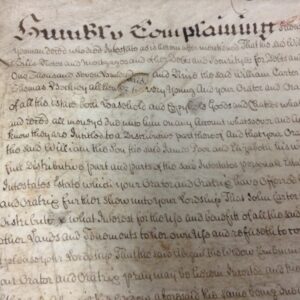 There is no substitute for original records. Parish registers, wills, land deeds, tax lists, apprenticeship papers, manorial records, chancery records – I can go on – many remain in local record offices, archives and museums, not digitised or indexed. Exploring local archives can also reveal details that no algorithm can infer: fabulous marginal notes, witness signatures, patterns of occupation, and most importantly, accurate connections.
Archives also provide context. Seeing entries page by page often clarifies which individuals belong to which family, something entries in an isolated index or database cannot always achieve.
Yes, it takes more time and requires patience. But it dramatically reduces the risk of attaching the wrong ancestor to your tree.
The Role of Professional Genealogists
For those unable to travel or navigate complex archival systems, hiring a professional genealogist can be a worthwhile investment. A trained researcher does more than search databases; they:
- Evaluate evidence critically
- Cross-reference sources
- Recognise common research pitfalls
- Distinguish between hypothesis and proof
Most importantly, professionals are trained to question inconsistencies. . . to be fair, professionals question everything. . . rather than smooth things over or make assumptions.
Technology is a Tool
Technology has transformed family history research in remarkable ways, and even a professional genealogist would not be without it – online catalogues, digitised newspapers, DNA analysis, and searchable online genealogical records have opened doors that were once firmly closed to all but the determined hobbyist or professional genealogist.
But, technology does not replace common sense. And it certainly does not grant a five-year-old the legal capacity to marry.
My client’s “telling off” of the AI may have been delivered in jest, but the lesson is serious: treat computer-generated family histories as starting points, not conclusions.
In genealogy, as in all historical research, evidence must be tested, not simply accepted just because it is confidently presented.
If you are unsure whether the connections in your family tree stand up to scrutiny, a careful review grounded in original sources can save years of inherited error. After all, our ancestors deserve accuracy, not algorithms.
If you want to make sure your family history is accurate and avoid “wrong” connections, I can help. Whether it’s reviewing your research, digging into local archives, or guiding you through tricky records, I’ll help you uncover the real story behind your ancestors.
Get in touch today at lorraine@timefliesancestry.co.uk